Podcast: Play in new window | Download
Follow the podcast: Apple Podcasts | Spotify | Amazon Music | RSS
The Bible presents work as a good gift from God: He created us to work, provide for others, and find purpose in serving Him. God gave Adam work before sin entered the world (Genesis 2:15), and Paul teaches us to work wholeheartedly for the Lord (Colossians 3:23). This includes employment, caring for a home, and the everyday responsibilities God entrusts to us.
My mission trip to Malawi and Uganda prompted me to reflect on how our beliefs shape our approach to work. In this study, I share those experiences and examine why God created us to work, how the Fall made labor difficult, and how we can find joy and purpose in the work He gives us.
For a fuller study of finding joy and purpose in your daily responsibilities, see my book Work and Rest God’s Way.
Table of contents
I was a business major in college. I’ve always enjoyed finance and economics. In 2024, I took a mission trip to Malawi, Africa, to teach at a Bible College and a Pastor’s Conference. In 2025, I went to Malawi and Uganda to put on marriage conferences. I was very interested in the countries’ economies on both trips, particularly why they are so poor.
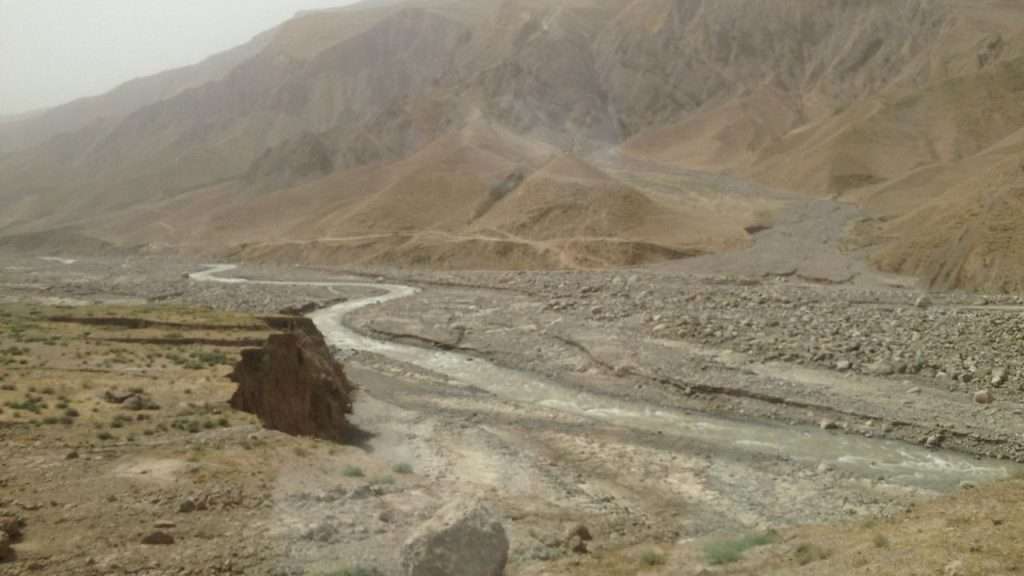
This is Afghanistan. Out of almost 200 countries, Afghanistan is the 10th poorest, and Malawi is 20th. There are two reasons Afghanistan is poor. First, all the military conflicts that have occurred within their borders. Second, as you can tell from the picture, nothing grows there. There’s little farmable land.

Malawi is a beautiful and lush country. We ate well there because of the bananas and the largest avocados I’ve ever seen.

We broke down in front of this restaurant in Malawi. I have been trying to get Katie to come to Africa with me. She kept refusing, so I sent her this picture and told her I would make us reservations if she would come with me. She’s still thinking about it.
What surprised me about Malawi and Uganda is how similar they are in terms of beliefs, marriage problems, environments, and economies.

This is a picture of the Nile I took from our hotel in Uganda. Again, you see how lush and green it is.

This furniture store is right outside our hotel and might reveal part of Uganda’s economic problems. It was raining incredibly hard at times, but the store owner kept the tarp over his bricks but left his couches exposed to the weather.

When Ricky, Johnny, and I visited Robert Wafula, our missionary, in Uganda, we had to take a ferry back and forth among the islands. This is a picture from when we approached the port. Again, you can see how lush and beautiful it is.
Can you see why I wondered why Malawi and Uganda are so poor? I am not going to say that either country has the resources to be wealthy, but I believe they have the resources to be in much better situations than they are in.
The Poverty Problem Is Spiritual Versus Physical
The more I traveled and spoke with people, the more convinced I became that poverty seems like a physical problem. However, while some physical factors exist, the problem is primarily spiritual. Much of Africa’s poverty can be attributed to disobeying God’s word. That’s why the best way to help the people in Uganda and Malawi is to help them spiritually rather than physically or financially. If the spiritual condition of the countries improved, the physical and financial conditions would improve.
This short clip shows us driving through a Ugandan village with Robert and two team members. Notice that the homes are of lower quality than the homes in Malawi. They are not even made of brick; they are made of mud.
Toward the end of the video, you can see a few men fishing and a woman in the water. I would guess she was about seven or eight months pregnant. I asked Robert about her, and he said she would have the baby in the village. I don’t think she could do anything if she had any problems. After delivering, she would probably go right back to work. This identifies one of the main spiritual problems in both countries. The women work very hard, but the men do not.
During one of my marriage conferences, one of the men raised his hand and said, “When I come home, I sit down, put my feet up, my wife goes to the other room to get a bowl of water, and then she returns and washes my feet.”
Three Consequences of Disobeying the Bible
When you drive down the road, men ride on bikes, scooters, or motorcycles. Women walk with huge loads on their heads and shoulders, often carrying babies on their backs. Why is it this way? When a man marries a woman, he pays the dowry or bride price for her. This is unbiblical, and whenever we go against Scripture, there are consequences, and here are three of them.
- Wives are often viewed as possessions. They were purchased and are owned by the men who bought them.
- Men don’t feel like they need to work. They already did their part. They earned their lives of ease because they saved money to buy their wives.
- Women must then work hard to pay back the dowry or bride price.
If you visit any nursery in Africa, it is filled with male babies. Nobody gives up female babies because they will make a family money, and they are the workhorses. But males are worthless and useless.

Instead of working, men play Bao. We broke down multiple times. Once, when we broke down, I took Ricky and Johnny to walk around a local village with me. That’s my thing: if we’re broke down, let’s mingle. They watched people playing Bao, probably the most popular game in the country because it requires little more than a board and some rocks.
When you drive through the areas of Malawi that have businesses and shops, you’ll see the men sitting in front playing Bao for hours while their wives are working. This is one reason for the poverty in Uganda and Malawi.
Hopefully, you see how the problem looks physical or financial, but it’s spiritual. There is an unbiblical view of marriage and work. If even these two things could be fixed, I can’t imagine how much better these countries would be.

Here’s a picture from when Ricky, Johnny, and I spent the day with Robert Wafula and saw his ministry in Uganda. Robert is next to me in the light blue shirt. Ronnie, in the purple shirt, is on the other end. He is the family pastor for SHIM, and his position is very important because of the poor biblical understanding of marriage and family. I told Ronnie how thankful I am for what he’s doing, and I only wish his voice could be magnified for the whole country.
Ugandans Are Poor Because They Disobey What the Bible Says About Work

Let’s be honest: we don’t enjoy talking with everyone. There are some people we enjoy talking with more than others. Ronnie was one of those people I thoroughly enjoyed talking with. I felt like I could have listened to him all day. At the beginning of the sermon, I told you that I like finance and economics, and that’s what he’s studying. I was very impressed with him. Like Robert, he is articulate and intelligent.
I said, “Tell me why you think the people in Uganda are so poor.” His answer described people’s disobedience to biblical financial principles. Here are three highlights of what he said.
First, people have no concept of saving or planning for the future
As soon as they get money, they spend it. In their minds, it’s like, “I get money for one reason: to spend it. I’ll do that as soon as I can.” But you could also argue that when you have so little money, you must spend it to survive. So, I don’t want to sound insensitive to their positions or act like I think it would be easy to save.
Second, socialism is destroying the country
As you can imagine, most family members don’t move away from each other. Villages are filled with generations that have lived together. One of the worst causes of laziness is a family member receiving money. Then, the rest of the family feels no obligation to work because they feel entitled to that money.
There’s a strong sense of entitlement. You see it with the youngest children. They will approach you and say, “Give me money.” In America, a capitalistic country, the idea is, “I want money, so I better work hard.” You might not view America that way, but if you spend little time in Africa, you will notice the different mentalities. In Africa, the idea is, “You have money, so you should give it to me.”
Third, there’s no shame about not working
In America, it’s shameful not to work, but in Malawi and Uganda, it is the norm. This contributes to the purposelessness that characterizes many people’s lives. People wander around with little to do, and many of them spend their time being incredibly unproductive.
This is why time has no value. Nobody shows up on time. Nothing starts when it’s supposed to start. And nobody thinks anything about it. Every day, when my marriage conferences were supposed to begin, only a fraction of the people were there. Then, everyone trickled in over the following two hours.
At the end of the first day of my marriage conference in Malawi, the man organizing the conference told the group, “We will start at 8 AM tomorrow.” Then, he picked up Andy and me at 8:30 AM the next day, and we started at about 10:30 AM. I can’t imagine running a business there with employees who show up whenever they feel like it.
Again, do you see how the problem is spiritual? God’s word commands diligence, timeliness, and productivity. Disobedience to these areas plunges the nation into poverty.
But not everyone in Malawi and Uganda is like this. Vicent, Robert, and the men with them are diligent, hard-working men. Why is there a difference with them? They are Christians, convicted of biblical truths, including those about work and laziness.
This is why I’m convinced the best way to help the people in Malawi and Uganda is to preach the gospel, bring them to faith in Christ, and allow the Holy Spirit to convict them about these areas of disobedience. I believe this would dramatically improve the countries.
What Does the Bible Say About Work?
Bob Black is an American anarchist and author. He is the author of The Abolition of Work. In it, he wrote:
No one should ever work. Work is the source of nearly all the misery in the world. Almost any evil you’d care to name comes from working or from living in a world designed for work. In order to stop suffering, we have to stop working.1
Bob Black thinks work is the cause of all suffering. I think Uganda and Malawi revealed that the lack of work causes immense suffering.
The Bible Says God Is a Worker
How do we know whether Bob Black is right? Maybe work is really bad. God is the standard for goodness or righteousness. Goodness or righteousness, is defined by God and what He does. God works, which makes work good. The Bible opens with God working:
Genesis 1:1 In the beginning God created the heavens and the earth.
Then God’s work is elaborated on in the following chapter:
Genesis 2:2 And on the seventh day God ended His work which He had done, and He rested on the seventh day from all His work which He had done. 3 Then God blessed the seventh day and sanctified it, because in it He rested from all His work which God had created and made.
The words “His work” occur three times in two verses. God is the first worker, revealing that work is good and righteous.
John 5:17 Jesus said, “My Father has been working until now, and I have been working.”
Jesus was a worker, too. We might have expected Jesus to spend all His time in the temple worshiping, praying, discussing Scripture, and doing things that seem spiritual. Instead, Mark 6:3 says He worked as a carpenter with His earthly father, Joseph, before beginning His public ministry. God expects us to follow His example.
The Bible Says God Created Us to Work
Let me be clear about work. It isn’t just a 9-5 job. Work is moms working at home and kids doing chores. Basically, unless you’re Hudson’s age, you should be working.
Acts 18:1-3 says Paul was a tentmaker. Colossians 4:14 says Luke was a physician.
God frequently called people to serve Him while they were working:
- Exodus 3:1 says Moses was caring for sheep.
- Exodus 33:11 says Joshua was Moses’ servant before he became his successor.
- Judges 6:11 says Gideon was threshing wheat.
- 1 Samuel 16:11 says David was caring for his father’s sheep when he was anointed.
- Luke 5:1-11 says Jesus called four men to serve as His disciples while they were fishing.
For others, their professions aren’t listed, but they worked so hard, Paul mentioned it in his letters:
- Acts 9:36 says Tabitha “was full of good works and charitable deeds.”
- Romans 16:12 says Tryphena, Tryphosa, and Persis were commended for their hard work for the Lord.
- Philippians 2:30 says Epaphroditus worked so hard he nearly died.
- In Philippians 4:2-3, Euodia, Syntyche, and Clement were praised because they “labored with [Paul].”
God had man work soon after creating him:
Genesis 2:15 says, “Then the Lord God took the man and put him in the garden of Eden to tend and keep it.”
This verse is straightforward. I didn’t want you to look at it because I need to explain it, or because I believe you’re unfamiliar with it. I wanted you to see it and notice two things about its location.
First, it’s before God fashioned Eve from Adam in verses 21 and 22. That’s surprising to me. Work is so fundamental to man’s existence that God had man working before He even gave him a wife. I would almost expect it to be the other way around: “Here’s a wife, so get a job so you can take care of her.” Second, consider Genesis 1:31:
Genesis 1:31 says, “Then God saw everything that He had made, and indeed it was very good. So, the evening and the morning were the sixth day.”
If you’re unfamiliar with the relationship between Genesis 1 and 2, it’s this: Genesis 1 provides an elevated view of all six days of creation. Genesis 2 zooms in on the sixth day when God created man. Genesis 1:31 tells us that everything was “very good” at the end of the sixth day. Why was everything very good at this point? The fall hadn’t taken place yet.
So, consider the timing of Genesis 2:15 again. Second, this means work existed before the fall. Work is not part of the curse or a punishment for sin. Instead, work is part of God’s natural, healthy design for us.
Our Motivations with Work
Our work is supposed to be fulfilling, purposeful, and rewarding. Few things are more satisfying for most of us than accomplishing a lengthy task or finishing a difficult job. Contrast us with animals for a moment. Animals are motivated by instinct and physical need. They “work” to survive. But we have higher motivations. We crave meaning, significance, and purpose. We want reasons to get up in the morning. Work gives us these reasons and satisfies these desires.
So, I’m talking about enjoying our work and finding it fulfilling. But let’s be honest: Even if you love your job, there are times you don’t. So why is that?
The Fall Brought a Curse on Work
Why don’t we always enjoy our work? Why isn’t work as pleasant for us as it was for Adam when God put him in the garden? After the fall, God pronounced several judgments. To man, He said:
Genesis 3:17 Cursed is the ground for your sake; in toil you shall eat of it all the days of your life. 18 Both thorns and thistles it shall bring forth for you, and you shall eat the herb of the field. 19 In the sweat of your face you shall eat bread till you return to the ground, for out of it you were taken; for dust you are, and to dust you shall return.
Think of all the things God could have used to punish man: confusion, disease, sickness, and enemies. These are punishments found in Deuteronomy 28 for disobeying the Mosaic law, so God could’ve afflicted man with these things, but at the fall, He said – of all things – that He would make work difficult.
The Hebrew word for toil is ʿiṣṣāḇôn and it implies challenge, difficulty, struggle, and exhaustion. God still expects us to work after the Fall, but now it will be unpleasant.
In verse 18, God said there would be thorns and thistles. The results are not always positive: we sow seed, but get weeds.
At the end of verse 18, notice the phrase “eat the herb of the field.” We even use this language when discussing our occupations: “What field do you work in?” This field stands in contrast to the garden. Previously, we worked in the pleasant garden; now, we work in the unpleasant field.
We Work After the Curse Is Removed
What about after the effects of the fall are removed?
Revelation 22:3 There shall be no more curse, but the throne of God and of the Lamb shall be in it, and His servants shall serve Him.”
Even in heaven, after the curse is removed, we continue serving. God expects us to work before, during, or after the curse.
The Bible Says Enjoying Our Work Is Good and Fitting
Second only to Jesus, Solomon was the wisest man ever to live. Listen to what he wrote and notice the repetition of the word toil:
Ecclesiastes 5:18 Behold, what I have seen to be good and fitting is to eat and drink and find enjoyment in all the toil with which one toils under the sun the few days of his life that God has given him, for this is his lot. 19 Everyone also to whom God has given wealth and possessions and power to enjoy them, and to accept his lot and rejoice in his toil—this is the gift of God.”
Solomon mentions our toil three times in two verses. This word brings us back to Genesis 3:17, when God told Adam, “Cursed is the ground for your sake; In toil you shall eat of it all the days of your life.” God described our work as toil, but He also said we could “find enjoyment in [our] toil” and “rejoice in [our] toil.” He makes the same point four other times, in Ecclesiastes 2:24, 3:12, 8:15, and 9:7, to ensure we don’t miss it.
Of all people, Solomon knew what this world had to offer – from the power, wealth, parties, relationships, you name it – he experienced it. He recognized it was unfulfilling, or as he called it, vanity. Instead, because we spend so much of our lives working, it is a great blessing, or it is good and fitting, as Solomon wrote, when we can find joy in our labor.
So, the obvious question is, how do we do this? We embrace the work God has given us, and think about its blessings. We focus on the fruit instead of the thorns and thistles. Fruit such as:
- Being able to provide for ourselves and our families
- Experiencing satisfaction and fulfillment from accomplishing tasks and being productive
- Developing character and endurance
- Making discoveries about God’s creation
- Advancing the kingdom of God through our talents and witness
Remembering these blessings allows us to view work as a gift and blessing instead of a curse.
- Bob Black, The Abolition of Work and Other Essays (Port Townsend: Loompanics Unlimited, 1986). ↩︎