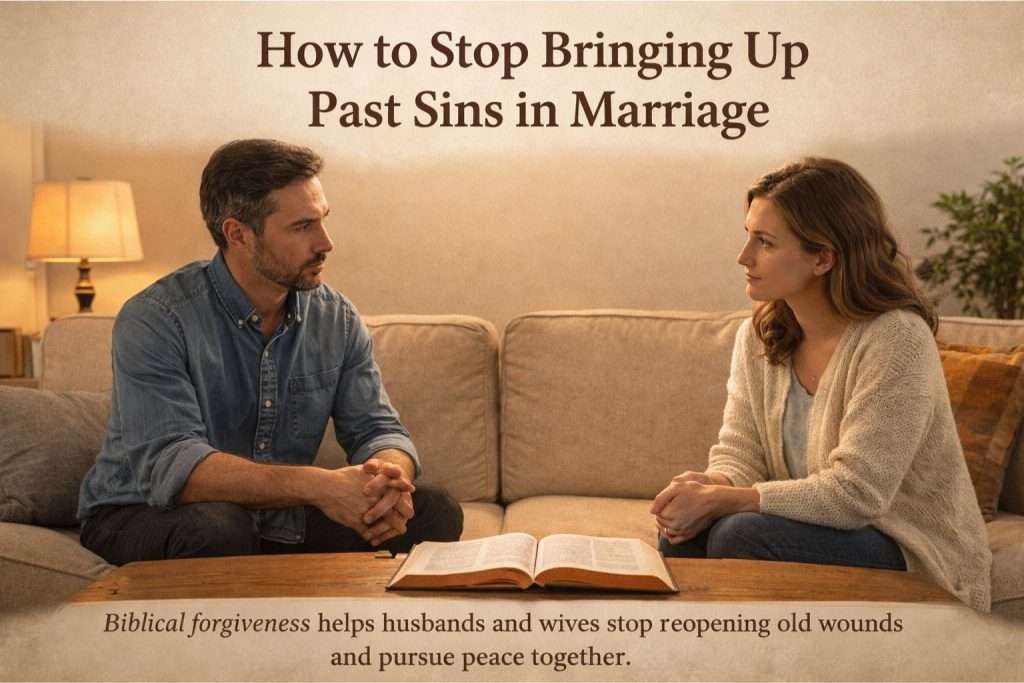
To stop bringing up past sins in marriage, husbands and wives must learn to practice biblical forgiveness rather than rehearse old failures. Many couples say they have forgiven each other, but then, during the next disagreement, past wrongs rush back into the conversation. Old words, old mistakes, old seasons of failure, and old wounds get pulled out again. This damages trust, weakens unity, and keeps a marriage stuck in a cycle of hurt.
Marriage brings two sinners together in a covenant relationship. That means there will be offenses, disappointments, and painful memories. But when forgiveness is extended, those sins should not be continually dragged back into the present as weapons. A spouse should not live in the shadow of confessed and forgiven sin that is repeatedly used against them.
The gospel shows us a better way. When God forgives us in Christ, He does not continue to accuse us of sins He has pardoned. In the same way, husbands and wives must learn to deal with sin truthfully, forgive sincerely, and then resist the temptation to keep reopening what God calls them to let go of.
Table of contents
- Why Spouses Keep Bringing Up the Past
- What Biblical Forgiveness Means
- Bringing Up the Past Undermines Marriage Unity
- When It Is Wrong to Bring Up Past Sins
- Five Destructive Things That Happen
- How to Stop Bringing Up Past Sins in Marriage
- What to Do if the Hurt Still Feels Fresh
- What a Grace-Filled Marriage Looks Like
- A Word to the Spouse Who Has Been Hurt
- Conclusion
Why Spouses Keep Bringing Up the Past
Spouses usually bring up past sins because the pain does not feel fully resolved. Sometimes this happens because the wound was never properly addressed. Other times, it happens because the offended spouse says, “I forgive you,” but continues to feed resentment in the heart. In other situations, the person who sinned may have apologized, but the pattern persisted, making the offense feel ongoing rather than finished.
Sometimes, bringing up the past is also a way to gain leverage in a current disagreement. A wife may think, If I remind him of what he did before, it will strengthen my argument now. A husband may think, If I bring up her past failures, I can defend myself in this moment. But this is not godly communication. It is a fleshly way of fighting for control.
Scripture tells us that love “keeps no record of wrongs” (1 Corinthians 13:5). This does not mean we develop amnesia. It means we do not maintain a mental ledger of offenses to pull out at our convenience. Love refuses to act like an accountant of every past sin.
When old sins are repeatedly brought up, the marriage begins to feel unsafe. Instead of confession leading to restoration, confession feels dangerous because it may be used again later. That makes it harder for spouses to be honest, vulnerable, and close.
What Biblical Forgiveness Means
Biblical forgiveness does not mean pretending sin never happened. It does not mean calling evil good or acting as though hurt is insignificant. It means letting go of personal vengeance and choosing not to hold someone’s sin against them as punishment.
Ephesians 4:31-32 says, “Let all bitterness and wrath and anger and clamor and slander be put away from you… Be kind to one another, tenderhearted, forgiving one another, as God in Christ forgave you.” Notice that bitterness and forgiveness are opposites. You cannot cling to bitterness while claiming to walk in forgiveness.
Forgiveness means you are choosing not to keep charging the offense to your spouse’s account. You are not saying the sin did not matter. You are saying you are entrusting justice to God and choosing not to make the offense a repeated weapon in the relationship.
This is especially important in marriage. If forgiveness is offered but past sins are repeatedly brought up, reconciliation is weakened. A spouse begins to wonder whether forgiveness was real or merely verbal.
Bringing Up the Past Undermines Marriage Unity
Genesis 2:24 teaches that husband and wife become one flesh. Because of that, repeatedly reopening forgiven sins harms not only your spouse but also the union itself. Every time an old offense is dragged back into a new argument, the marriage is pulled backward instead of forward.
This habit also discourages repentance. If a husband knows his confessed sin will be used against him again and again, he may begin to lose hope that restoration is possible. If a wife feels she can never move beyond earlier failures because they are continually brought up, she may become discouraged and defensive.
Satan loves this pattern because it keeps marriages chained to the past. Instead of growing in grace, the couple remains trapped in repeated cycles of accusation and defensiveness. What should have been buried through confession and forgiveness gets dug up again.
God calls us to something better. He calls us to peace, tenderness, patience, and forgiveness. A strong marriage is not one with no past sins. It is one where confessed sins are not continually resurrected.
When It Is Wrong to Bring Up Past Sins
There is a difference between wisely addressing unresolved patterns and wrongly reviving forgiven sin. If a spouse continues in the same behavior, the issue is not merely past; it is present. A wife may need to say, “This pattern is still happening.” A husband may need to say, “We have not really dealt with this because it continues.” That is different from pulling out an old matter that was truly confessed, addressed, and forgiven.
It is wrong to bring up past sins to shame your spouse. It is wrong to bring them up to win an argument. It is wrong to bring them up to punish your spouse emotionally. It is wrong to bring them up in moments that have nothing to do with the original issue, simply because you are angry and want to hurt back.
Proverbs 17:9 says, “Whoever covers an offense seeks love, but he who repeats a matter separates close friends.” If repeating a matter can divide close friends, how much more can it divide a husband and wife? Repeating what God calls you to cover in love harms intimacy.
Five Destructive Things That Happen
When spouses keep revisiting old failures, several harmful things happen.
- First, trust erodes. Confession begins to feel unsafe because the sin may be remembered and reused.
- Second, present conversations become cluttered with past baggage. Instead of addressing today’s problem clearly, the discussion turns into a courtroom full of historical evidence.
- Third, bitterness grows. The heart starts feeding on remembered wrongs rather than on grace and truth.
- Fourth, peace disappears. A marriage cannot thrive when old wounds are continually reopened.
- Finally, the gospel is obscured. Marriage is meant to reflect Christ’s relationship with His people. When husbands and wives repeatedly accuse one another of confessed sins, they portray condemnation more than grace.
Romans 8:1 says, “There is therefore now no condemnation for those who are in Christ Jesus.” That does not erase accountability in marriage, but it does remind us that relationships shaped by the gospel should not be dominated by ongoing accusation.
How to Stop Bringing Up Past Sins in Marriage
1. Be honest about whether you have truly forgiven
Sometimes spouses say the words “I forgive you” before they are ready to walk in what forgiveness requires. That does not mean forgiveness is impossible. It means you may need to go back before the Lord and deal honestly with lingering resentment.
Ask yourself: Am I still nurturing this hurt? Do I revisit it often in my mind? Do I secretly want to make my spouse feel the weight of it again? Those questions can expose whether bitterness is still active in the heart.
2. Refuse to weaponize old failures
When conflict arises, discipline yourself not to reach for old ammunition. Even if you remember something painful from the past, that does not mean you should speak about it.
James 1:19 says we should be “quick to hear, slow to speak, slow to anger.” In marriage, being slow to speak often means refusing to say the first sharp thing that comes to mind.
3. Address present issues as present issues
Stay with the actual problem in front of you. If the disagreement is about tonight’s conversation, do not drag in last year’s argument or a failure from five years ago. Keep the discussion clear and specific.
This helps prevent conflict from becoming overwhelming. Many arguments spiral because one issue turns into ten.
4. Pray when old memories surface
Sometimes hurtful memories come back suddenly. When they do, bring them to God rather than to your spouse immediately. Tell the Lord what you are feeling. Ask Him for help to respond with grace, wisdom, and self-control. Prayer is one of the best ways to keep old wounds from ruling your speech.
5. Replace accusation with edification
Ephesians 4:29 says, “Let no corrupting talk come out of your mouths, but only such as is good for building up.” When you feel tempted to bring up the past, ask yourself whether what you are about to say will help restore, clarify, or build up. If not, it likely should remain unsaid.
6. Talk about unresolved patterns the right way
If the matter truly is not past because the same sin is still ongoing, address it calmly and directly. Say, “I think this is still affecting us,” rather than, “You always do this, just like before.” The goal is not to use the past as a club but to identify a pattern that genuinely needs attention.
7. Remember how God has treated you
Nothing softens the heart more than remembering how much mercy you have received. If God were to deal with us according to our sins, none of us could stand. Yet in Christ, we are forgiven, cleansed, and loved. That mercy should shape how we respond to our spouse.
What to Do if the Hurt Still Feels Fresh
Sometimes a spouse keeps bringing up the past because it still feels emotionally present. This is especially true when the wound was deep or the consequences lasted a long time. In those situations, the answer is not pretending everything is fine. The answer is to pursue deeper healing in a godly way.
That may mean having a calm conversation specifically about the lingering hurt, rather than letting it bleed into unrelated arguments. It may mean seeking pastoral or biblical counseling. It may mean distinguishing between forgiveness and rebuilding trust, since trust may take longer depending on the nature of the offense.
But even in those situations, the goal is healing, not repeated punishment. A spouse should be able to say, “I am still struggling with the pain of this,” without turning every conflict into a re-trial of old sins.
What a Grace-Filled Marriage Looks Like
A grace-filled marriage is not one where no one fails. It is one where sin is confessed honestly, forgiveness is extended sincerely, and old offenses are not endlessly revived. In that kind of marriage, spouses feel safer admitting wrong because they know grace has room to work.
This does not mean there are no hard conversations. It means those conversations are aimed at restoration instead of retaliation. It means husband and wife are learning to put away bitterness and walk in tenderness. It means they are seeking to reflect Christ more than merely prove themselves right.
Children also benefit from seeing this. When they watch parents handle failure with confession, forgiveness, and restraint, they see the beauty of the gospel lived out in ordinary life.
A Word to the Spouse Who Has Been Hurt
If you have been deeply hurt, this subject may feel heavy. You may think, But what happened really mattered. And that is true. God never asks you to call evil small. He does ask you to bring your pain to Him, seek biblical help where needed, and resist the temptation to let remembered wrongs control your words and actions.
Forgiveness is not saying the wound was light. It is saying God’s grace is greater. It is saying the marriage will not be ruled by a ledger of past offenses. It is saying that, by God’s help, you want peace more than payback.
That kind of response is not natural. It is supernatural. It comes from the Spirit’s work in a heart that has been changed by Christ.
Conclusion
If you want to stop bringing up past sins in marriage, you must pursue more than better conflict habits. You must pursue biblical forgiveness, humility, and grace. Old sins should not become recurring weapons in a marriage that is meant to reflect the mercy of Christ.
When husbands and wives confess sin honestly, forgive sincerely, and refuse to keep reopening what has been dealt with, their marriage can move forward in peace. Trust grows. Communication becomes safer. Unity deepens. And the gospel is displayed more clearly in the home.
May the Lord help us put away bitterness, resist the urge to rehearse old wrongs, and love our spouses with the same mercy we have received in Christ.


2 Responses
This very helpful article hits the nail on the head. I will seek to resolve old hurts God’s way and for His glory. Thank you!
William,
Thank you for sharing that. I’m glad the article was helpful. May the Lord give you wisdom and grace as you address those old hurts and seek to honor Him. Remembering how freely God has forgiven us in Christ helps us extend that same forgiveness to others (Ephesians 4:32).
In Christ,
Scott