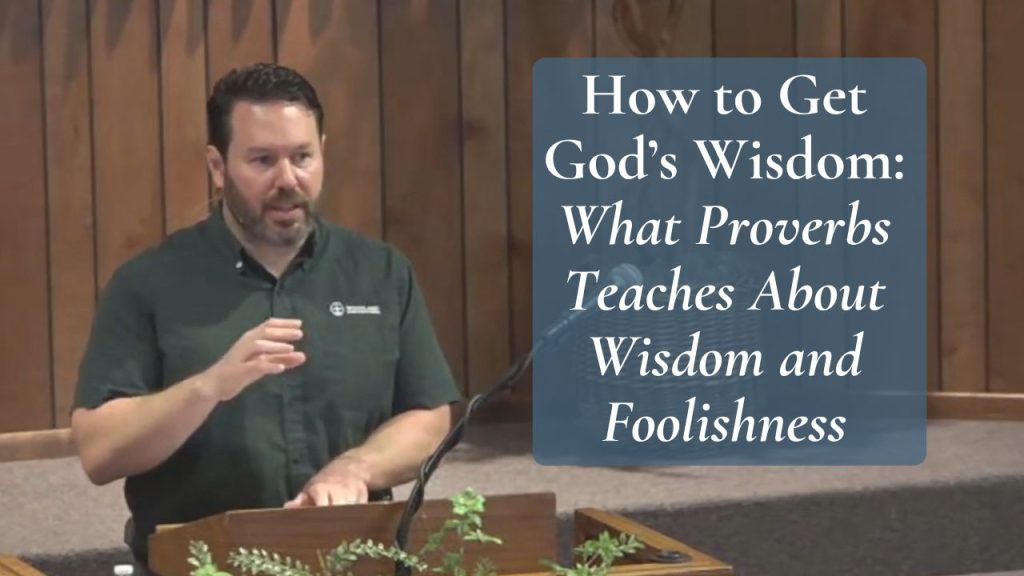
How do we get God’s wisdom? Scripture calls us to fear the Lord, ask Him for wisdom, receive His Word, turn from sin, and put what we learn into practice. Proverbs 1–2 shows that wisdom is both God’s gift and something we must earnestly pursue. More information alone will not make us wise; we need hearts willing to hear and obey Him.
Podcast: Play in new window | Download
Follow the podcast: Apple Podcasts | Spotify | Amazon Music | RSS
Table of Contents
- Ask the God Who Gives Wisdom Generously
- Recognize the Difference Between Knowledge and Wisdom
- Receive Correction and Turn from Sin
- Take the Consequences of Rejecting Wisdom Seriously
- Seek Wisdom as Something Truly Valuable
- Make the Pursuit of Wisdom a Daily Practice
- Begin with the Truth You Already Know
- Questions for Reflection
- Watch the Sermon
We have access to more opinions and advice than we can absorb. Yet knowing where to find information does not tell us which counsel to trust or how to live faithfully. Job 28 asks where wisdom can be found and directs us to the God who knows its way. Verse 28 connects wisdom with fearing the Lord and understanding with turning from evil.
Ask the God Who Gives Wisdom Generously
James 1:5 encourages anyone who lacks wisdom to ask God, who gives generously. In the context of trials, that promise directs us toward dependence on the Lord. We do not have to pretend we know how to face every difficulty.
Proverbs 1:20–21 portrays wisdom as a woman calling in public places. The image emphasizes an open summons: people are being called to listen. Wisdom is not reserved for an impressive spiritual elite. God makes His instruction known and calls us to receive it.
The fear of the Lord is foundational (Proverbs 1:7). Seeking His wisdom means honoring His authority, not merely asking Him to endorse a decision we have already made. We approach His Word ready to be corrected.
That also requires attention. Competing voices can crowd our lives: entertainment, social media, constant commentary, and conversations that reward cleverness more than truth. Ask what is occupying your mind and whether it helps you hear and obey God’s Word.
Recognize the Difference Between Knowledge and Wisdom
Proverbs 1:22 addresses the simple, scoffers, and fools. These descriptions expose different ways of resisting wisdom. The simple need discernment; scoffers treat correction with contempt; fools reject the knowledge that would redirect their lives.
| Response to instruction | A better response |
|---|---|
| Accepting claims without discernment | Examine them in light of God’s Word and wise counsel. |
| Mocking correction | Listen humbly before defending yourself. |
| Knowing what is right but refusing it | Obey the truth you already understand. |
A person can possess considerable information and still act foolishly. Wisdom involves the right use of knowledge in the fear of God. The question is not only whether I can explain the truth, but whether it governs my decisions.
James 4:17 makes the responsibility plain: knowing the right thing and failing to do it is sin. This explanation of sins of omission develops that point. When we consider how to deal with fools, we should first be willing to examine our own response to correction.
Receive Correction and Turn from Sin
In Proverbs 1:23, personified Wisdom calls her hearers to turn at her reproof and promises to make her words known. Repentance belongs at the heart of gaining wisdom because we cannot cling to sin while welcoming the truth that exposes it.
Reading Scripture honestly will sometimes unsettle us. It may expose a habit, a cherished excuse, or a way of treating someone that we have defended for years. Growth begins when we receive that correction instead of explaining it away.
The verse uses the poetic speech of Wisdom, promising to make her instruction known to those who receive correction. The wider New Testament also teaches our dependence on the Spirit for spiritual understanding; Ephesians 1:17–18 connects wisdom with knowing God and having enlightened hearts.
Ask the Lord to help you understand His Word, then respond to what is clear. Prayer for insight should lead toward confession and obedience rather than becoming a substitute for them.
Take the Consequences of Rejecting Wisdom Seriously
Proverbs 1:24–32 gives a severe warning. People reject counsel and reproof, then face the fruit of their chosen way. Wisdom’s warning is urgent because foolishness has consequences that cannot always be undone when trouble arrives.
Jeremiah 2:19 likewise describes evil bringing its own painful correction. Dishonesty damages trust, uncontrolled anger harms relationships, and pride shuts out counsel we need. Sin is destructive even when its immediate appeal seems strong.
The parable of the rich fool shows how worldly success can coexist with spiritual foolishness. A full storehouse cannot compensate for neglecting God. We need wisdom that prepares us to answer to Him.
These warnings should move us to repent now. They do not authorize us to declare that every person suffering hardship must have made a foolish choice. Scripture’s call is to examine our conduct and listen, not to invent accusations against others.
Seek Wisdom as Something Truly Valuable
Proverbs 2:1–5 describes receiving words, treasuring commands, attending to wisdom, calling for insight, and searching as for hidden treasure. Those actions express how seriously we value what God provides. Wisdom is a gift, but receiving it is not the same as remaining passive.
Verse 6 supplies the foundation: the Lord gives wisdom. Our effort does not make Him indebted to us. We study, ask, listen, and obey because He is the source of the understanding we need.
For a closer look at the passage, read receiving God’s words and treasuring His commands. The challenge is practical: do our priorities reflect the value we say wisdom has?
Make the Pursuit of Wisdom a Daily Practice
Like physical training, growth in wisdom ordinarily involves repeated practice. One workout does not establish lasting strength, and hearing one sermon does not remove every foolish habit. Over time, God uses His Word, prayer, correction, and obedient practice to shape us. For examples involving friendship, correction, planning, and work, see Proverbs 27 explained: wisdom for everyday life.
- Read attentively. Ask what a passage teaches about God and how it addresses your conduct.
- Pray specifically. Bring an actual decision or difficulty before the Lord.
- Seek counsel. Listen to believers whose lives reflect faithfulness, including when their advice challenges you.
- Act on what is clear. Identify one concrete step of obedience rather than stopping at a general intention.
Ordinary faithfulness matters because our need to know and obey God continues. These additional lessons on wisdom offer further reflection.
Begin with the Truth You Already Know
God’s wisdom is available through His gracious instruction, and we need to pursue it with humility. Ask Him for understanding, receive correction, and refuse the temptation to collect truth without practicing it.
Begin with two questions: What is distracting me from God’s Word? And what do I already know is right but have failed to do? The answers may reveal the next faithful step. Wisdom is worth the time and humility it requires, because life ordered by the fear of the Lord is a treasure far greater than mere information.
Questions for Reflection
- Where are you collecting information without acting on what Scripture teaches?
- How have you responded to a recent correction?
- What practical step can help you seek and apply God’s wisdom this week?